Fire Risk Assessments for Commercial Buildings: What Businesses Need to Know in 2026
Fire Safety & Compliance
Table of Contents
What Is a Fire Risk Assessment?
A fire risk assessment is a structured review of a commercial building that identifies fire hazards, evaluates risks to occupants and determines what measures are needed to improve fire safety and comply with UK fire safety legislation.
For most commercial buildings in the UK, a fire risk assessment is a legal requirement. It helps ensure that people can safely escape in the event of a fire and that appropriate fire prevention and protection measures are in place.
If you are responsible for a commercial building, office, school, hospitality venue or public premises, you should have a suitable and regularly reviewed fire risk assessment in place.
Why Fire Risk Assessments Matter
Many organisations think of fire risk assessments as paperwork required for compliance. In reality, they are one of the most important tools for protecting employees, visitors, customers, contractors, residents and building users.
A fire risk assessment provides a clear understanding of where risks exist and what actions should be prioritised. It also helps organisations demonstrate that fire safety is being managed responsibly.
For facilities managers, landlords and business owners, it forms the foundation of an effective fire safety strategy.
Are Fire Risk Assessments a Legal Requirement?
In most commercial settings, yes.
The Regulatory Reform Fire Safety Order places responsibilities on the Responsible Person to assess fire risks and implement suitable fire safety measures.
The Responsible Person may be:
An employer
A building owner
A landlord
A managing agent
A facilities manager
A property management company
The assessment must be suitable for the building and reviewed when circumstances change.
For official guidance, businesses should refer to GOV.UK workplace fire safety responsibilities:
This government guidance explains fire safety responsibilities and legal obligations for workplaces and commercial premises.
What Does a Fire Risk Assessment Actually Look At?
A fire risk assessment examines three key areas: fire hazards, people at risk and existing fire safety measures.
1. Fire Hazards
This includes anything that could start a fire.
Examples include:
Electrical equipment
Overloaded sockets
Heating systems
Cooking facilities
Flammable materials
Hot works
Waste storage
The assessor will identify potential ignition sources and consider how they are managed.
2. People at Risk
The assessment considers who may be affected by a fire.
This may include:
Employees
Visitors
Contractors
Vulnerable occupants
Disabled persons
Students
Customers
Different buildings create different challenges. A school, office and hotel will each require different considerations.
Relevant Barry Turner & Son sector pages:
3. Existing Fire Safety Measures
The assessor will review the effectiveness of existing protections.
These often include:
Fire alarms
Emergency lighting
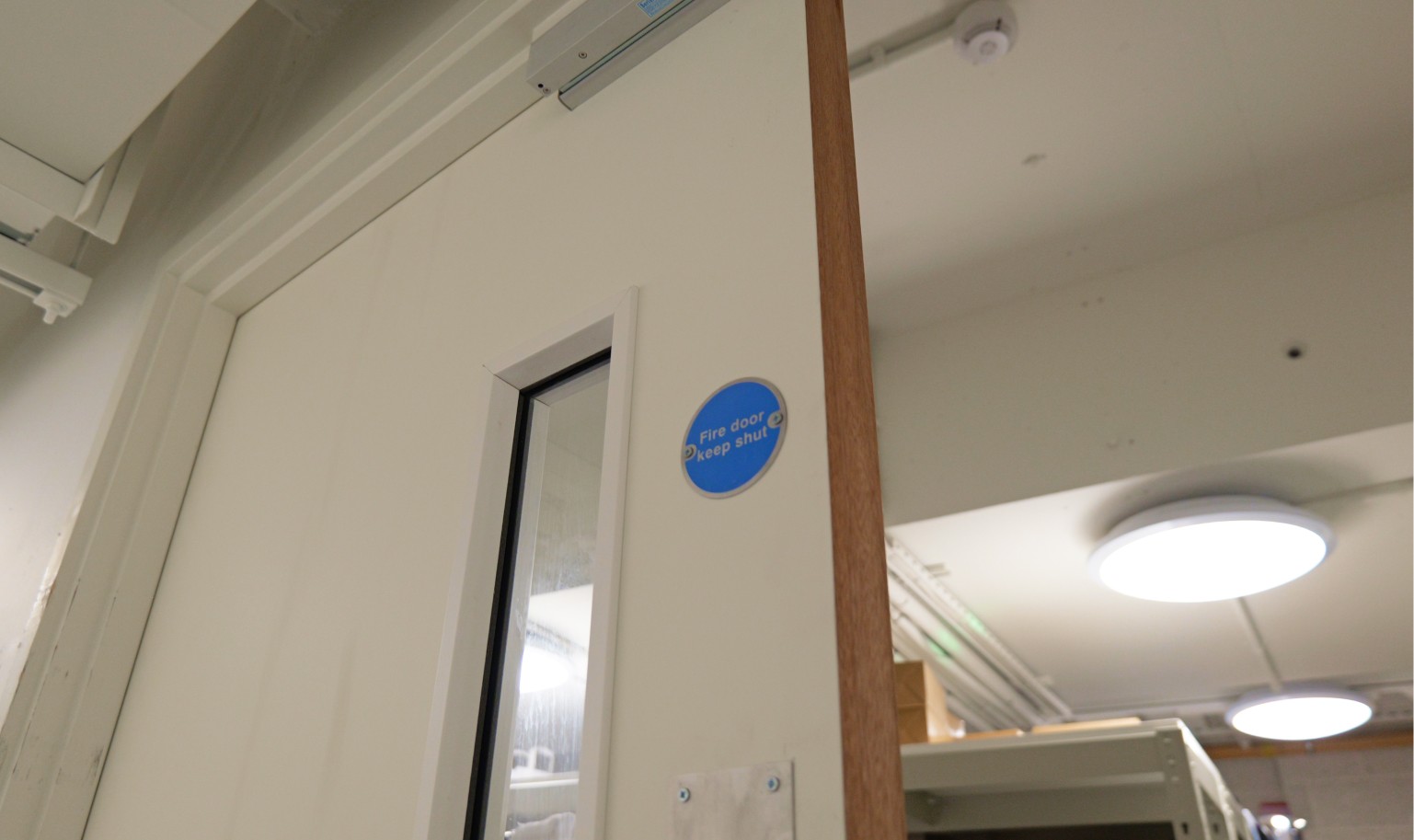
Fire doors
Fire stopping
Escape routes
Compartmentation
Evacuation procedures
Staff training
This is where many organisations discover issues that have developed gradually over time.
Common Issues Found During Fire Risk Assessments
Many findings are not dramatic. In fact, some of the most common issues are relatively simple to resolve when identified early.
Fire Doors Not Closing Properly
Fire doors are one of the most frequently identified concerns.
Common problems include:
Damaged seals
Faulty closers
Excessive gaps
Damaged door leaves
Related Barry Turner & Son services:
Blocked Escape Routes
Escape routes should remain clear and unobstructed.
Assessments often identify:
Stored materials
Waste accumulation
Locked exits
Poor housekeeping
Inadequate Fire Stopping
Service penetrations created during building works may compromise compartmentation if not properly sealed.
This is particularly common after:
Office refurbishments
Fit-outs
Service upgrades
HVAC installations
Emergency Lighting Issues
Emergency lighting should function correctly if normal power is lost.
Assessments often highlight:
Failed fittings
Missing testing records
Inadequate coverage
Outdated Documentation
The physical building may be compliant while the paperwork is not.
Assessors frequently identify:
Missing records
Outdated evacuation plans
Incomplete maintenance logs
How Often Should Fire Risk Assessments Be Reviewed?
There is no fixed annual requirement written into legislation. However, assessments should be reviewed regularly and whenever significant changes occur.
Common triggers include:
Refurbishment projects
Building extensions
Occupancy changes
Layout alterations
New equipment installations
Changes in building use
For many organisations, an annual review is considered good practice. Buildings with higher occupancy levels or greater risks may require more frequent attention.
Fire Risk Assessments During Commercial Refurbishment Projects
One of the most important times to review fire risk is during refurbishment.
Commercial projects often involve:
New layouts
New partitions
Service alterations
Ceiling modifications
Fire door changes
Mechanical and electrical upgrades
All of these can affect fire safety arrangements.
This is why fire safety should be considered early in project planning rather than after works have been completed.
Related Barry Turner & Son reading and project examples:
Checklist: What Facilities Managers Should Check Between Assessments
A fire risk assessment should not be the only time fire safety is reviewed.
Facilities teams should regularly monitor:
Fire doors
Escape routes
Emergency lighting
Fire alarm testing
Housekeeping standards
Fire stopping integrity
Maintenance records
Staff awareness
A proactive approach helps prevent small issues becoming larger compliance concerns.
Fire Risk Assessments and Schools
Schools present unique fire safety challenges because of high occupancy levels, vulnerable users, changing classroom layouts, specialist teaching areas and large estate portfolios.
For education settings, fire risk assessments should form part of a wider planned maintenance strategy.
Fire Risk Assessments and Office Buildings
Modern office environments continue to evolve. Hybrid working, fit-outs, technology upgrades and changing workplace layouts all influence fire safety planning.
Regular reviews help ensure:
Escape routes remain effective
Occupancy assumptions remain accurate
Compartmentation remains intact
Fire doors remain compliant
Why Fire Risk Assessments Should Not Be Treated As a Tick-Box Exercise
The most effective organisations use fire risk assessments to guide maintenance and investment decisions.
Rather than asking, “Have we got a fire risk assessment?”, a better question is, “What is our fire risk assessment telling us about the building?”
The findings often help prioritise:
Fire door upgrades
Fire stopping works
Maintenance programmes
Refurbishment planning
Compliance improvements
This creates safer buildings and often reduces long-term costs.
FAQ Section
Is a fire risk assessment a legal requirement for commercial buildings?
Who is responsible for arranging a fire risk assessment?
How often should a fire risk assessment be reviewed?
What is the most common issue found during fire risk assessments?
Do office refurbishments affect fire risk assessments?
What happens if issues are identified?
Does a fire risk assessment replace fire door inspections?
Can schools and educational buildings require different fire safety considerations?
Conclusion
A fire risk assessment is much more than a compliance requirement. It provides a practical roadmap for improving fire safety, protecting occupants and helping organisations manage their responsibilities effectively.
For facilities managers, landlords, schools, commercial property owners and business operators, understanding the findings and acting on recommendations is often far more important than simply having the assessment itself.
Barry Turner & Son Ltd supports commercial property owners and facilities teams through specialist fire door installation and remedials, fire stopping works and wider commercial building maintenance and compliance services.
If you are planning refurbishment works, reviewing compliance responsibilities or addressing fire safety recommendations, our team can help support your project from planning through to completion.
BARRY TURNER & SON
Other News
01