Professional commercial painting and decorating for offices, schools and warehouses.
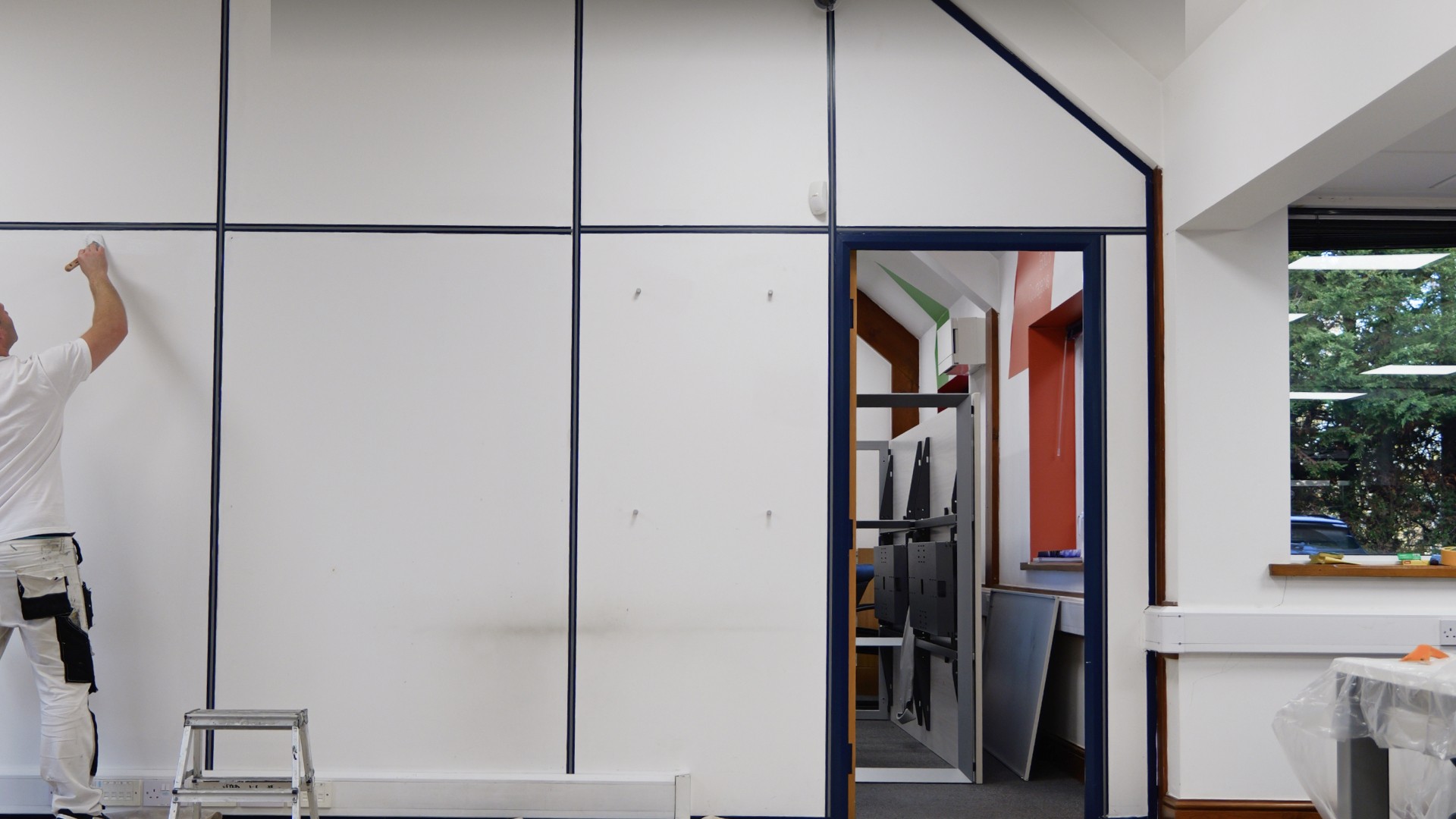
Brand new office install with large desk in the centre and plent of chairs

Commercial Interiors

Table of Contents

Why a planned decorating programme matters

Commercial painting is not only about a fresh appearance. In an office, school or warehouse, the right preparation, finish and programme help the space remain practical for the people who use it. A quick repaint can disappoint if damaged surfaces, moisture, heavy traffic or access constraints have not been addressed first.

Barry Turner & Son provides commercial painting and decorating as a defined service or part of a wider refurbishment. The starting point should be a clear scope of surfaces, condition and operating requirements.

What to survey before requesting a quote

Record the rooms and surfaces to be treated, existing coatings, cracks or water damage, furniture and equipment to protect, access restrictions and desired finish. Note whether ceilings, joinery, doors, metalwork or external areas are included. Ask for repairs and preparation to be identified separately from the final coat, so quotations can be compared fairly.

For high-use areas, discuss cleanability, durability and maintenance expectations with the contractor. A finish suited to a meeting room may not be the best choice for a busy corridor, loading area or washroom. Product selection should follow the surface and environment, not a generic specification.

Offices, schools and warehouses need different phasing

An occupied office may require evening or staged work around teams and meetings. A school may prefer part of the work during a holiday, while still allowing time for cleaning, inspection and reopening. Warehouse work can depend on vehicle routes, racking, production and safe access at height.

Agree work zones, temporary protection, ventilation, drying time, waste handling and the hand-back standard before starting. If the building will remain in use, make the communication and access plan part of the brief. See our school and education support for the wider estate context.

Keep decorating aligned with the wider project

Painting is often one of the last visible stages of a commercial refurbishment. If partitions, lighting, flooring, washrooms or other services are changing, programme the decorating after the disruptive work and allow for any making-good. This reduces the chance of freshly finished areas being damaged by later trades.

A useful quotation checklist

Ask each contractor to state:

  • the areas, surfaces and quantities included;

  • preparation and repairs allowed for;

  • coating system and finish assumptions;

  • protection, access and working hours;

  • programme, drying and hand-back arrangements;

  • exclusions, provisional items and any further survey needed.

A well-scoped proposal makes it easier to balance appearance, disruption and long-term upkeep. To discuss a project, send Barry Turner & Son the site address, photos, approximate areas, current condition and preferred work window through the enquiry page.

Professional commercial painting and decorating for offices, schools and warehouses.

Brand new office install with large desk in the centre and plent of chairs

Commercial Interiors

Table of Contents

Why a planned decorating programme matters

Commercial painting is not only about a fresh appearance. In an office, school or warehouse, the right preparation, finish and programme help the space remain practical for the people who use it. A quick repaint can disappoint if damaged surfaces, moisture, heavy traffic or access constraints have not been addressed first.

Barry Turner & Son provides commercial painting and decorating as a defined service or part of a wider refurbishment. The starting point should be a clear scope of surfaces, condition and operating requirements.

What to survey before requesting a quote

Record the rooms and surfaces to be treated, existing coatings, cracks or water damage, furniture and equipment to protect, access restrictions and desired finish. Note whether ceilings, joinery, doors, metalwork or external areas are included. Ask for repairs and preparation to be identified separately from the final coat, so quotations can be compared fairly.

For high-use areas, discuss cleanability, durability and maintenance expectations with the contractor. A finish suited to a meeting room may not be the best choice for a busy corridor, loading area or washroom. Product selection should follow the surface and environment, not a generic specification.

Offices, schools and warehouses need different phasing

An occupied office may require evening or staged work around teams and meetings. A school may prefer part of the work during a holiday, while still allowing time for cleaning, inspection and reopening. Warehouse work can depend on vehicle routes, racking, production and safe access at height.

Agree work zones, temporary protection, ventilation, drying time, waste handling and the hand-back standard before starting. If the building will remain in use, make the communication and access plan part of the brief. See our school and education support for the wider estate context.

Keep decorating aligned with the wider project

Painting is often one of the last visible stages of a commercial refurbishment. If partitions, lighting, flooring, washrooms or other services are changing, programme the decorating after the disruptive work and allow for any making-good. This reduces the chance of freshly finished areas being damaged by later trades.

A useful quotation checklist

Ask each contractor to state:

  • the areas, surfaces and quantities included;

  • preparation and repairs allowed for;

  • coating system and finish assumptions;

  • protection, access and working hours;

  • programme, drying and hand-back arrangements;

  • exclusions, provisional items and any further survey needed.

A well-scoped proposal makes it easier to balance appearance, disruption and long-term upkeep. To discuss a project, send Barry Turner & Son the site address, photos, approximate areas, current condition and preferred work window through the enquiry page.

Professional commercial painting and decorating for offices, schools and warehouses.

Brand new office install with large desk in the centre and plent of chairs

Commercial Interiors

Table of Contents

Why a planned decorating programme matters

Commercial painting is not only about a fresh appearance. In an office, school or warehouse, the right preparation, finish and programme help the space remain practical for the people who use it. A quick repaint can disappoint if damaged surfaces, moisture, heavy traffic or access constraints have not been addressed first.

Barry Turner & Son provides commercial painting and decorating as a defined service or part of a wider refurbishment. The starting point should be a clear scope of surfaces, condition and operating requirements.

What to survey before requesting a quote

Record the rooms and surfaces to be treated, existing coatings, cracks or water damage, furniture and equipment to protect, access restrictions and desired finish. Note whether ceilings, joinery, doors, metalwork or external areas are included. Ask for repairs and preparation to be identified separately from the final coat, so quotations can be compared fairly.

For high-use areas, discuss cleanability, durability and maintenance expectations with the contractor. A finish suited to a meeting room may not be the best choice for a busy corridor, loading area or washroom. Product selection should follow the surface and environment, not a generic specification.

Offices, schools and warehouses need different phasing

An occupied office may require evening or staged work around teams and meetings. A school may prefer part of the work during a holiday, while still allowing time for cleaning, inspection and reopening. Warehouse work can depend on vehicle routes, racking, production and safe access at height.

Agree work zones, temporary protection, ventilation, drying time, waste handling and the hand-back standard before starting. If the building will remain in use, make the communication and access plan part of the brief. See our school and education support for the wider estate context.

Keep decorating aligned with the wider project

Painting is often one of the last visible stages of a commercial refurbishment. If partitions, lighting, flooring, washrooms or other services are changing, programme the decorating after the disruptive work and allow for any making-good. This reduces the chance of freshly finished areas being damaged by later trades.

A useful quotation checklist

Ask each contractor to state:

  • the areas, surfaces and quantities included;

  • preparation and repairs allowed for;

  • coating system and finish assumptions;

  • protection, access and working hours;

  • programme, drying and hand-back arrangements;

  • exclusions, provisional items and any further survey needed.

A well-scoped proposal makes it easier to balance appearance, disruption and long-term upkeep. To discuss a project, send Barry Turner & Son the site address, photos, approximate areas, current condition and preferred work window through the enquiry page.