Fire Door Checks Made Simple: Gaps, Seals, Closers and the Red Flags People Miss
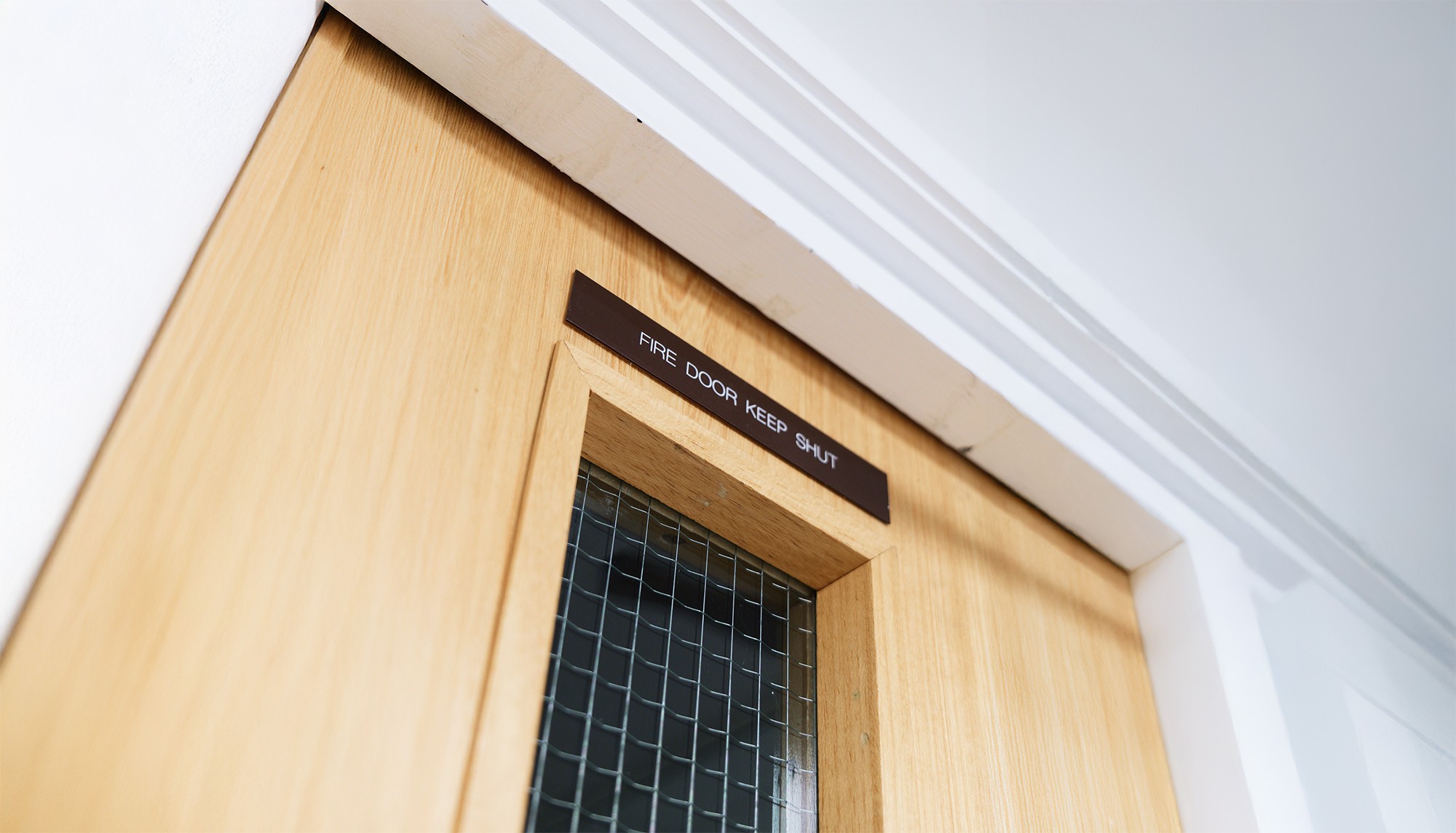
Fire Door Checks
Table of Contents
Fire doors only work when they close properly, latch properly and seal properly. The frustrating bit is that many common failures are small and easy to miss until an inspection or an incident forces action.
This guide is built around real user intent: “What should I check and what counts as a problem?” It’s also aligned with the checks described in the UK government’s fire door guidance.
If you’re responsible for a building and need surveys or remedials, these are the most relevant service pages:
Quick answer: the 60-second fire door check
Do these three checks in order. If any fail, log it and book remedials.
Close test
Open the door fully then let it go. It should close fully into the frame and latch. Then repeat from about 15 degrees. This is the simple test recommended in the UK government fire door guidance.Gap glance
Look along the sides and top. If the gap looks uneven, visibly wide, or you can see daylight, it needs a proper gap check.Seal scan
Check the perimeter seals are present, continuous and not damaged or painted over. Government guidance specifically flags damaged or painted-over seals as an issue.
What counts as a fail right away
These are the “do not ignore” issues:
The door does not close into the frame or does not latch
The door is wedged open or the closer has been disabled
Large gaps around the door edge
Missing, damaged or painted intumescent strips or smoke seals
Hinges have missing screws or the door is dragging badly
Glazing is cracked, loose or looks like it has been altered
These are all consistent with the simple checks set out in the government guidance and London Fire Brigade advice for property managers.
How to check gaps properly
This is the check that catches the most failures.
What gap size should you be looking for
UK government fire door guidance states the industry standard is no more than 4mm around the door to frame gap, except at the bottom where it should be as small as practical without snagging.
You will also see best practice references to 2–4mm at the head and vertical edges, with threshold limits depending on the door’s smoke control needs and specification.
The simple way to measure
Use a gap tester card or gauge rather than guessing by eye. Government guidance notes these are available and useful.
Check: hinge side, latch side, top edge
If it varies a lot from top to bottom, that usually points to wear, poor alignment, hinge issues or a door that has dropped
If you want a quick printable checklist style approach, the government guidance is the most reliable reference point for what to look for.
How to check seals
What you’re checking
You’re looking for intumescent strips (fire) and smoke seals (smoke). They may be combined.
What good looks like
Present around the perimeter where specified
Continuous, not cut short around hardware
Not torn, crushed or missing sections
Not painted over
UK government guidance explicitly calls out seals that are damaged, not making contact, or painted over.
London Fire Brigade also highlights combined seals and the need to ensure components like letter plates are suitable.
If seals are missing or damaged, do not DIY swap parts unless you are matching the door’s certified specification. This is where remedial works matter.
How to test the self-closer
Self-closers are a common point of failure because doors get heavy use and people get tempted to “make it easier”.
The closer test
Open the door fully and release, it should close fully and latch
Open the door about 15 degrees and release, it should still close fully and latch
This exact approach is recommended in the government guidance.
What a failing closer looks like
Door stops short of the frame
Door closes but does not latch
Door slams aggressively (can cause damage and tampering)
Door only closes from a wide open position, not from a small angle
Hinges, latches and glazing
Hinges and screws
No missing screws
No looseness or movement in the hinge leaf
No heavy rubbing that suggests the door has dropped
Government guidance flags obvious defects like missing or loose screws in hinges and ironmongery.
Latches and handles
The latch should engage easily
The handle should return properly
No stiffness that prevents full closure
Glazing and vision panels
No cracks
No loose beading
No signs the glazing has been changed
Government guidance includes checking the condition of fire-resisting glazing systems and associated panels.
Common defects we see
These show up again and again:
Gaps that have grown beyond tolerance due to wear or door drop
Seals painted over during decorating
Closers adjusted badly so doors do not latch
Hinges with loose screws or missing fixings
Door held open without a compliant hold-open arrangement
When to book a survey or remedial works
Book professional help if:
The door fails the close test
Gap sizes are out of tolerance
Seals are missing, damaged or painted over
The door leaf is damaged, warped or modified
You need documentation for compliance or handover
For businesses, blocks, offices, public buildings and managed sites, remedial works and sign-off are exactly what this service is for: Commercial Fire Door Installations & Remedials.
If you’re also tightening up broader compliance on refurb projects, this article pairs well: 7 Compliance Essentials for UK Commercial Refurbishments in 2025.
Fire door FAQs
How often should fire doors be checked?
For multi-occupied residential buildings over 11m in England, the Fire Safety (England) Regulations 2022 introduced requirements including quarterly checks of fire doors in common parts and annual checks of flat entrance doors on a best endeavours basis.
Even outside that category, responsible persons still have duties under fire safety law to keep doors effective as part of general fire precautions.
What is the most common reason fire doors fail?
Doors not closing and latching properly, excessive gaps or damaged seals. The government guidance focuses heavily on exactly these points because they stop doors doing their job.
Can I fix a fire door problem myself?
Basic reporting and simple checks, yes. Technical changes, parts swaps, seal replacement, closer replacement, glazing changes, no. The fact sheet on the regulations makes clear the routine check is to spot obvious issues, with more detailed checks or specialist involvement needed when faults are found.
What gap is too big around a fire door?
Government guidance states the industry standard is no more than 4mm around the frame gap, except the bottom which should be as small as practical without snagging.
Need a compliant fix with documentation?
If you want the doors checked properly and brought up to spec, use:
BARRY TURNER & SON
Other News
01